The vehicle

Strangely, this vehicle, built by Chevrolet, was never used by the US Army. Instead, during the Second World War it saw service with British, Commonwealth and Free forces. It had two 97 hp engines side by side!
The kit
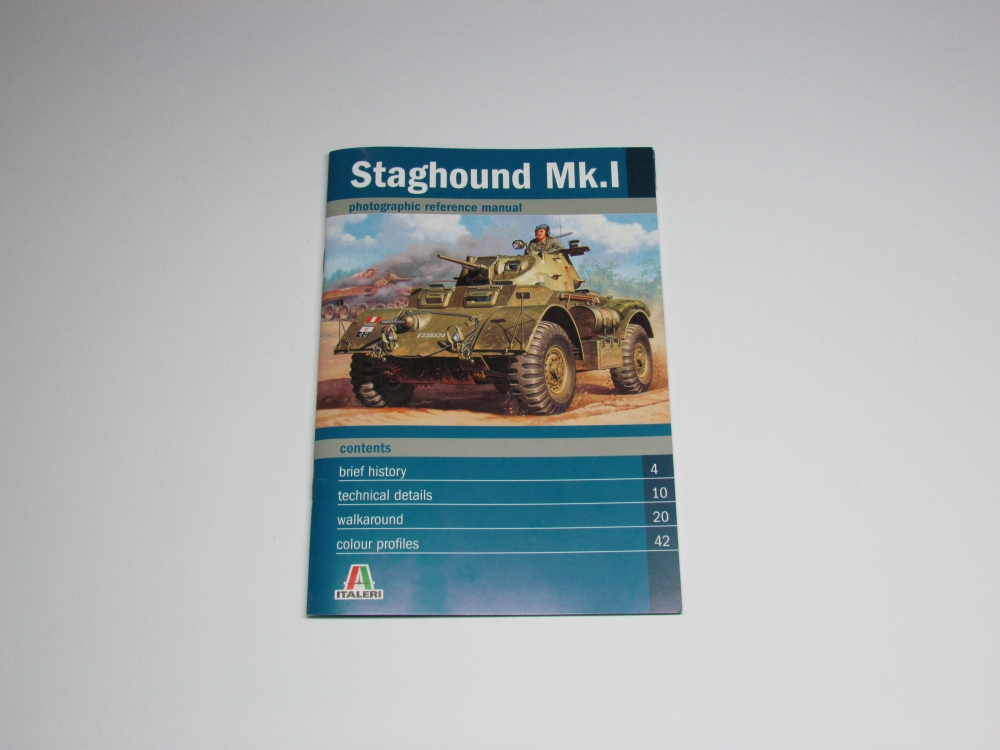
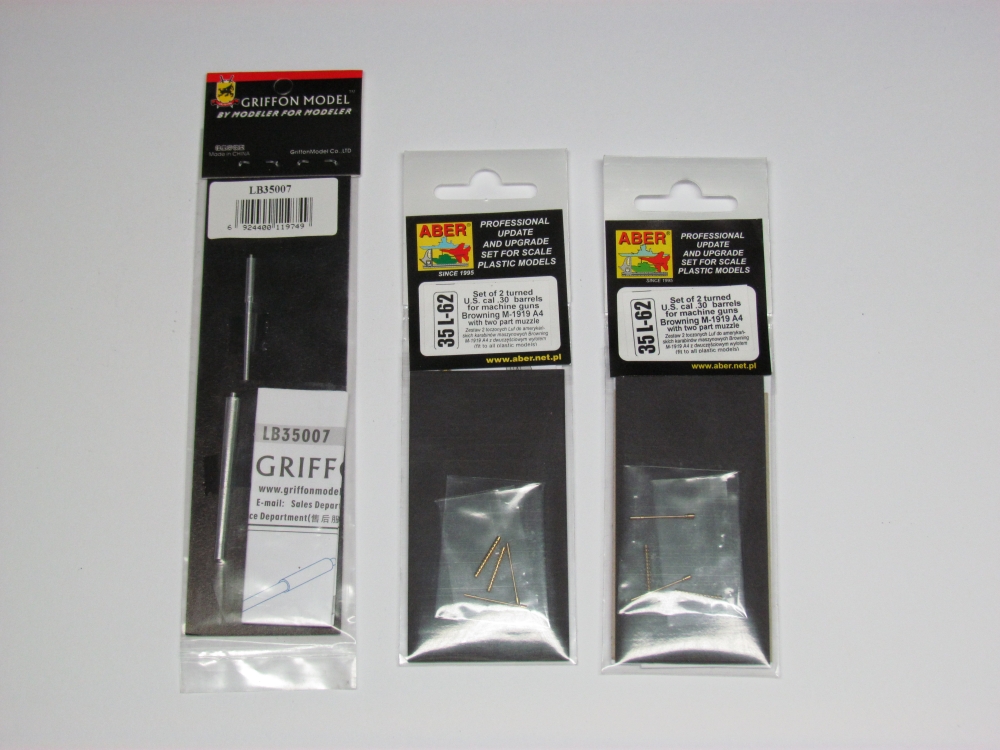
A Tamiya\Italeri 1/35 kit. It comes with a great colour booklet, full of close up photographs. This is normally the kind of thing you have to see if the likes of Osprey publish. Generally I am fussy when it comes to barrels and tracks – I almost always seek a metal replacement for the plastic parts. Obviously tracks are not relevant in this case. But I got the Aber Browning .30 cal barrels and Griffon Model M6 37mm gun barrel.


Assembly
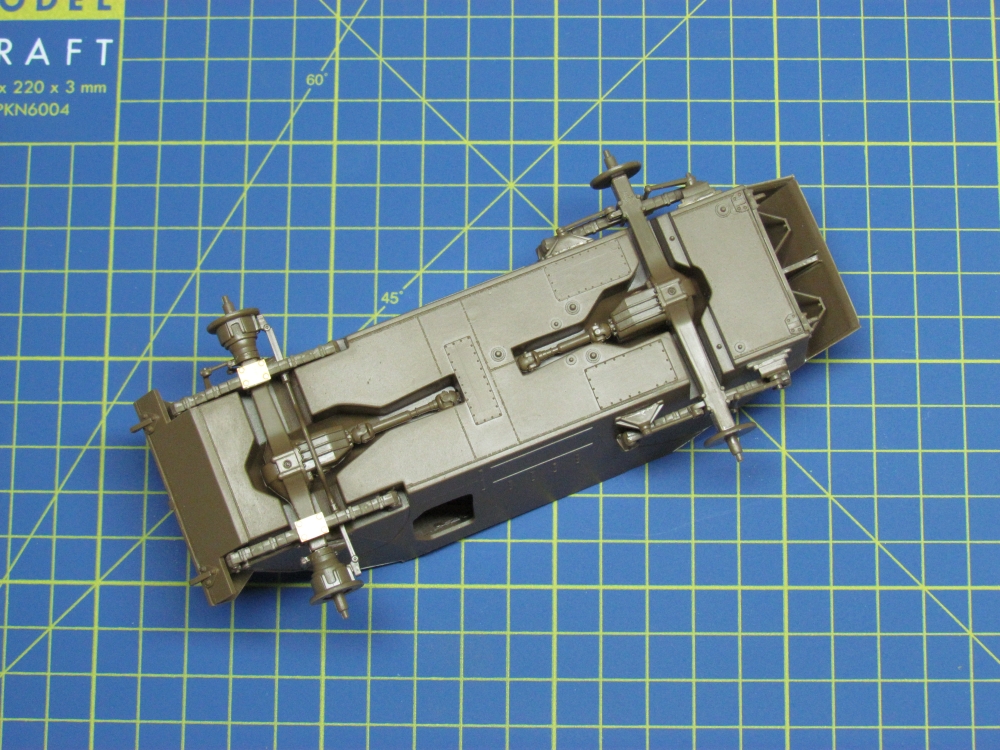
The suspension:
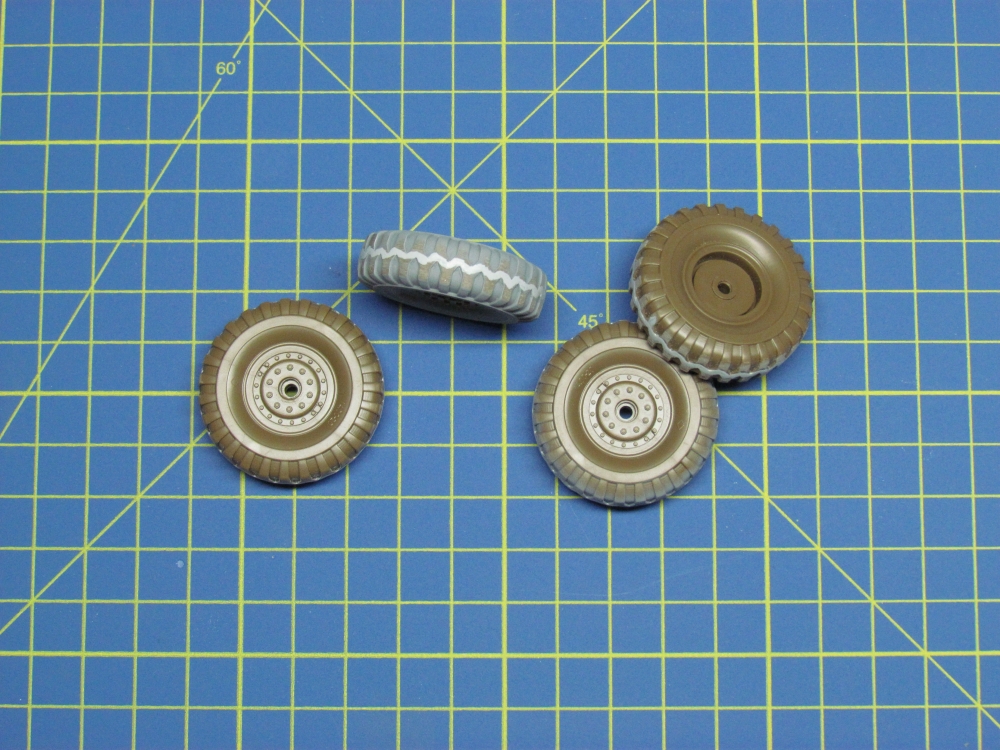
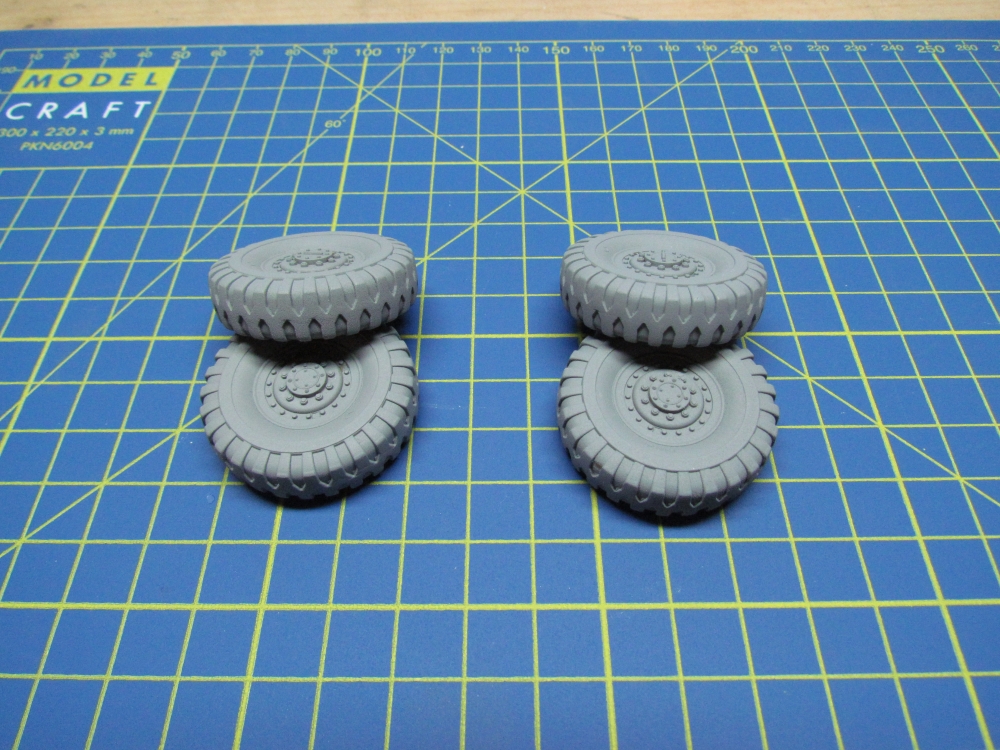
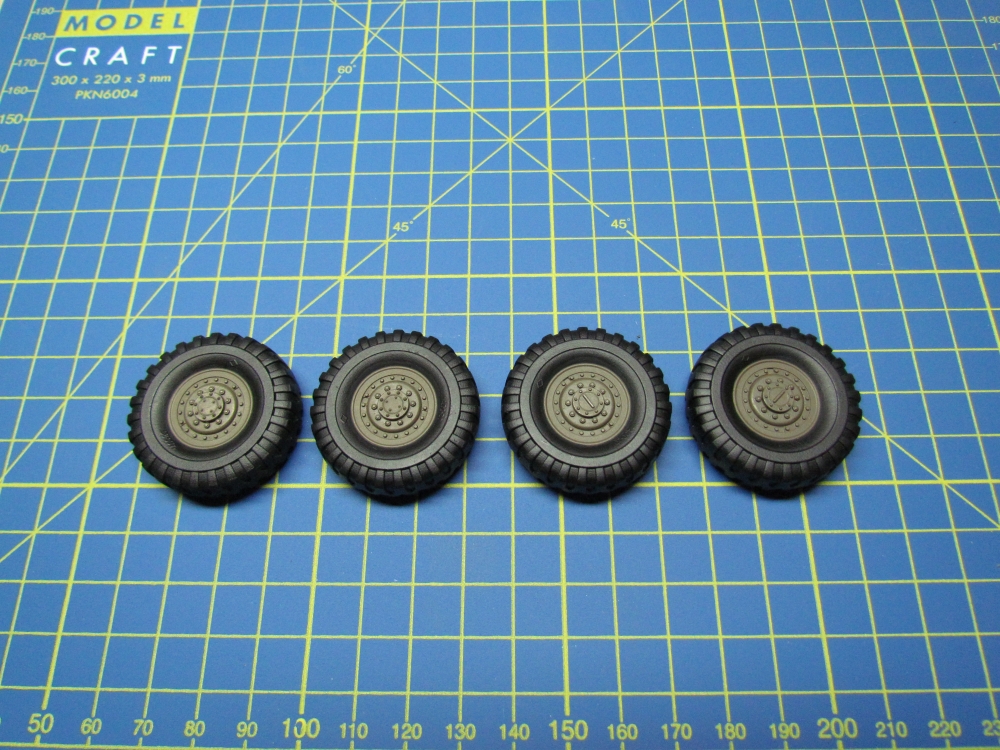
The wheels are impressive! The join line needed filling (with Mr.Surfacer 500) and sanding:

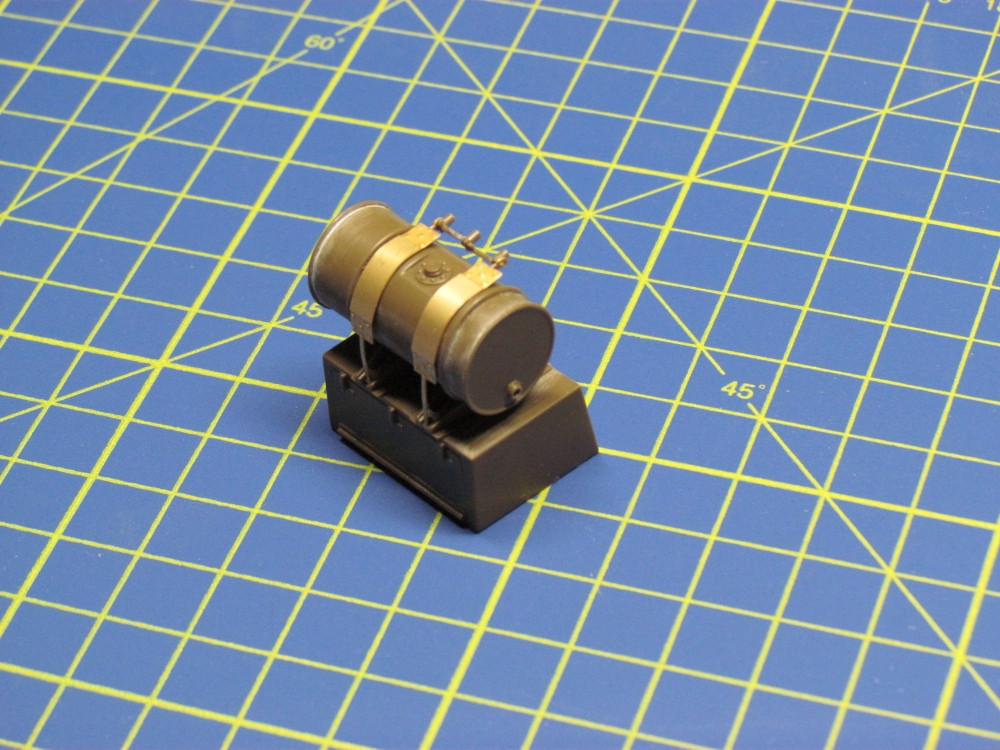
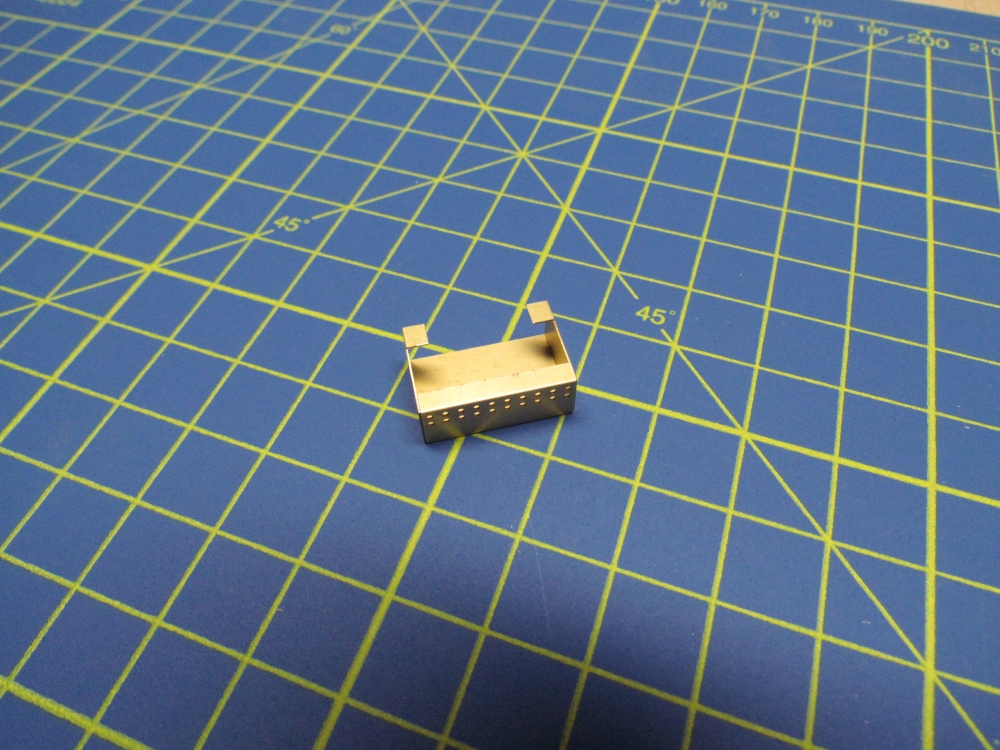
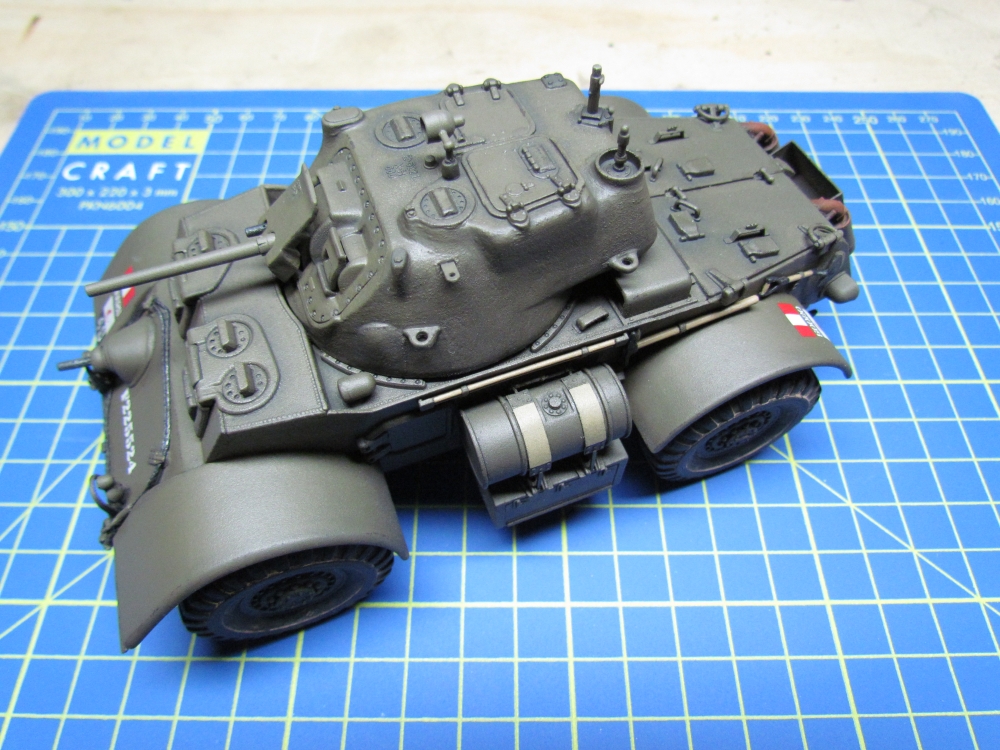
The extra fuel tanks include nice photo etch pieces. The pipe connecting into them appeared to be too short, so I improvised with brass wire. I managed to make a bit of a mess of one of the bolts that hold up the fuel tanks and it called for that shoddy tactic of using an item of stowage to disguise it!
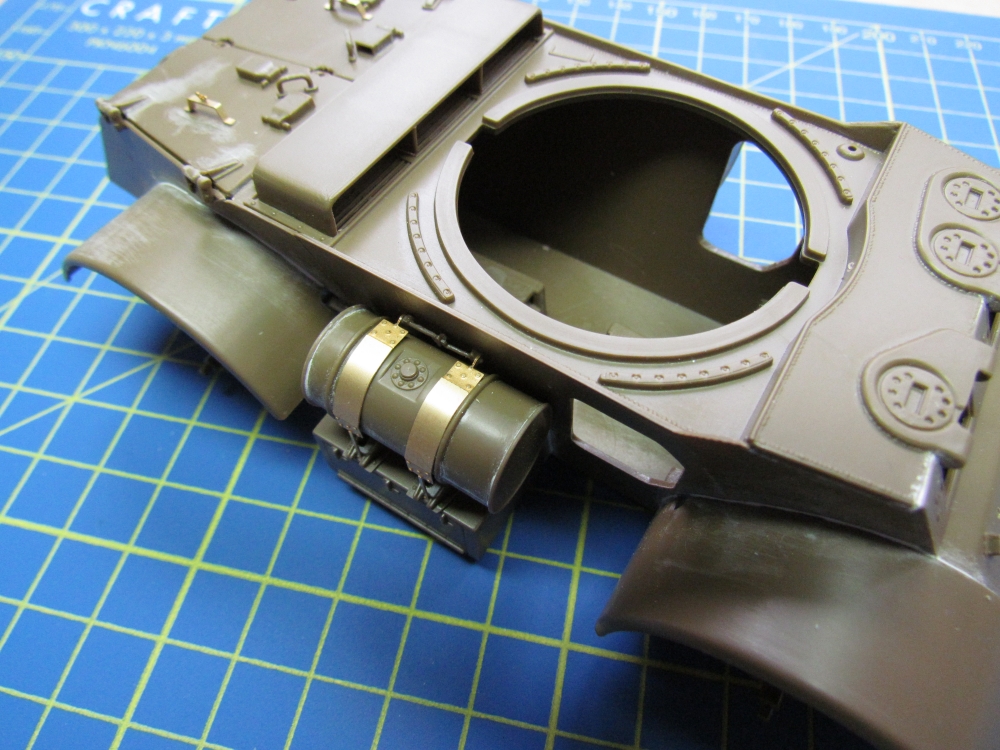
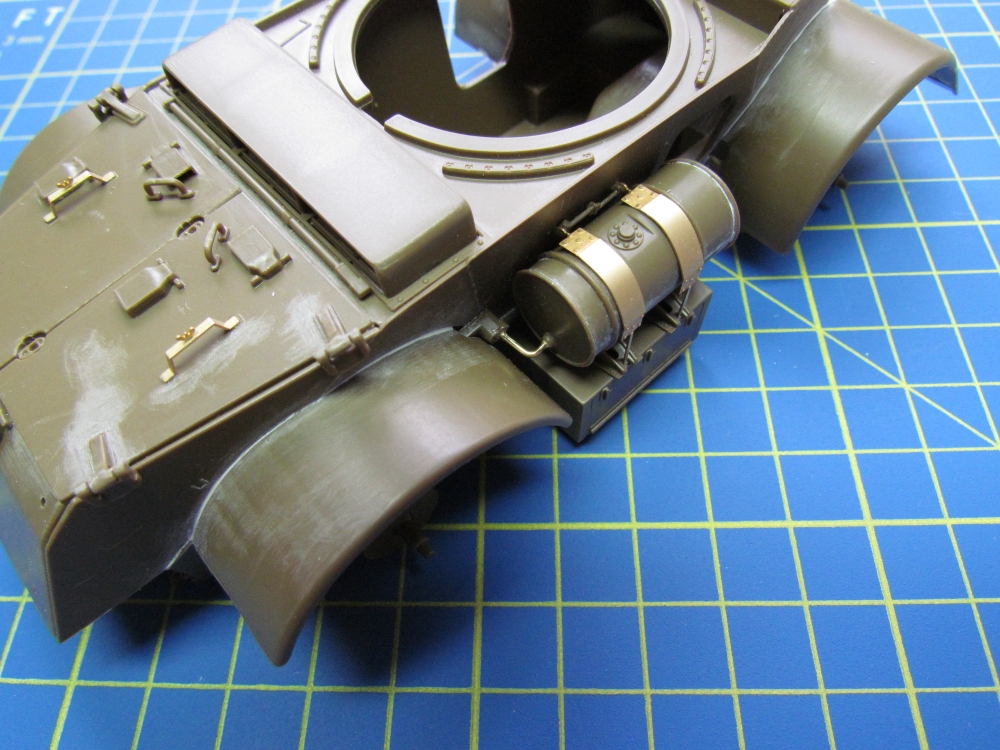
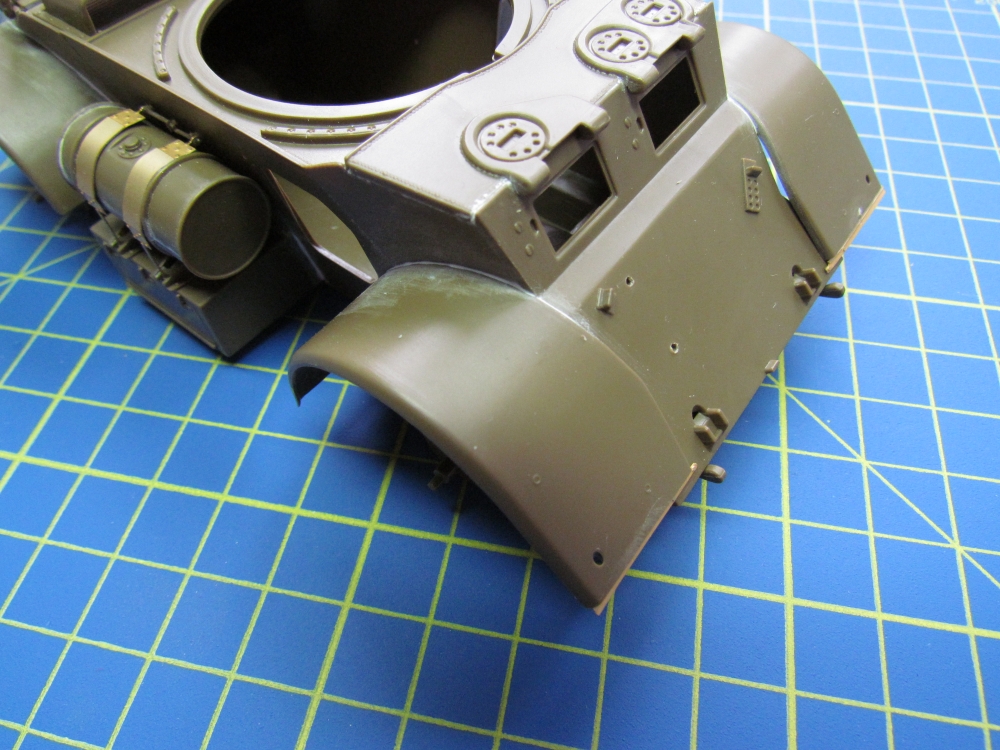
The fenders fitted well enough and slowly the hull had all details added.
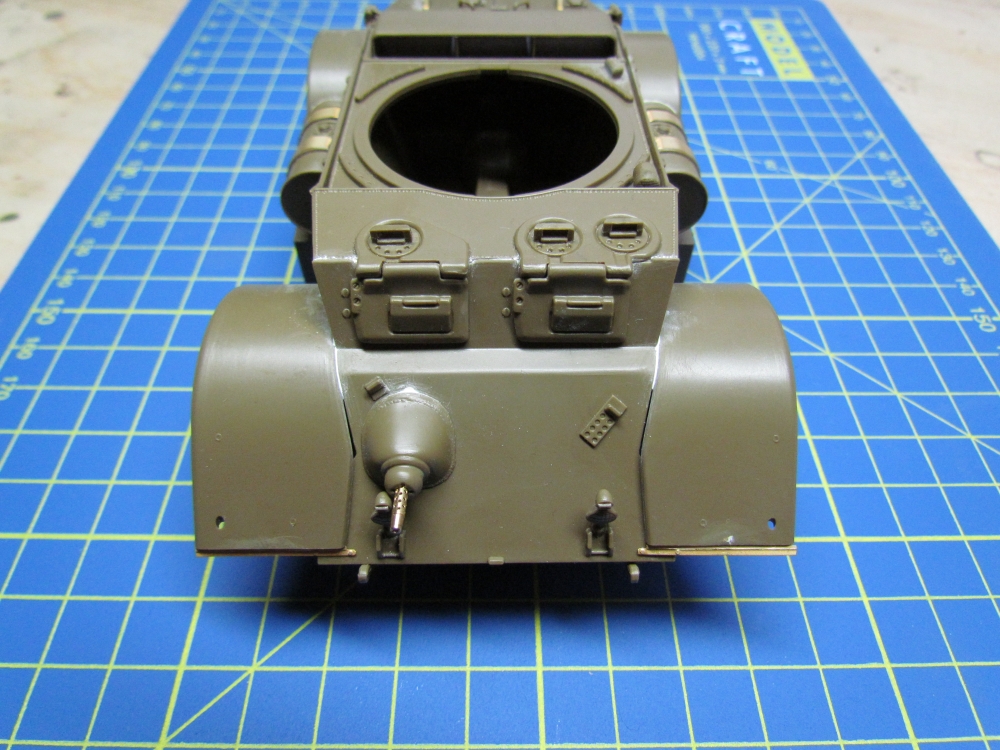
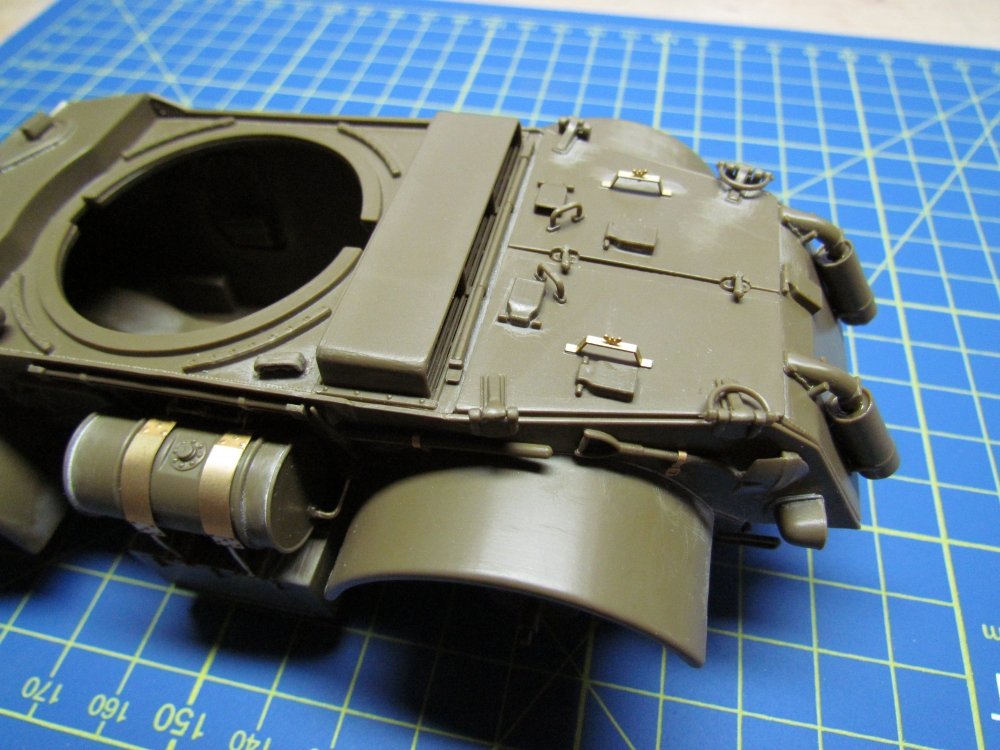
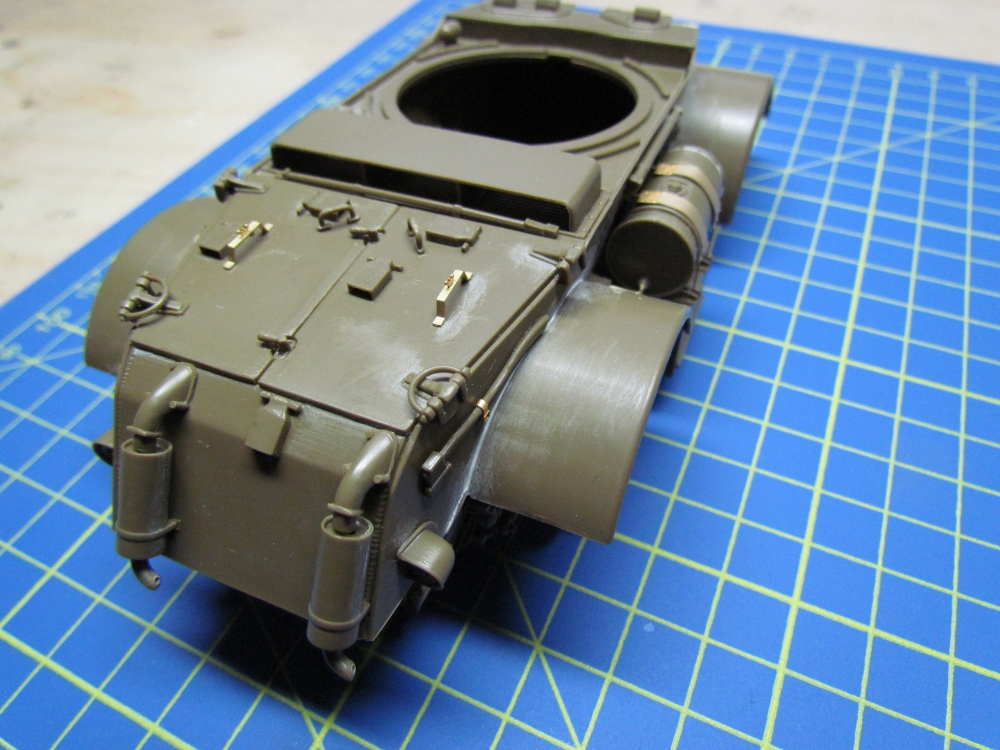

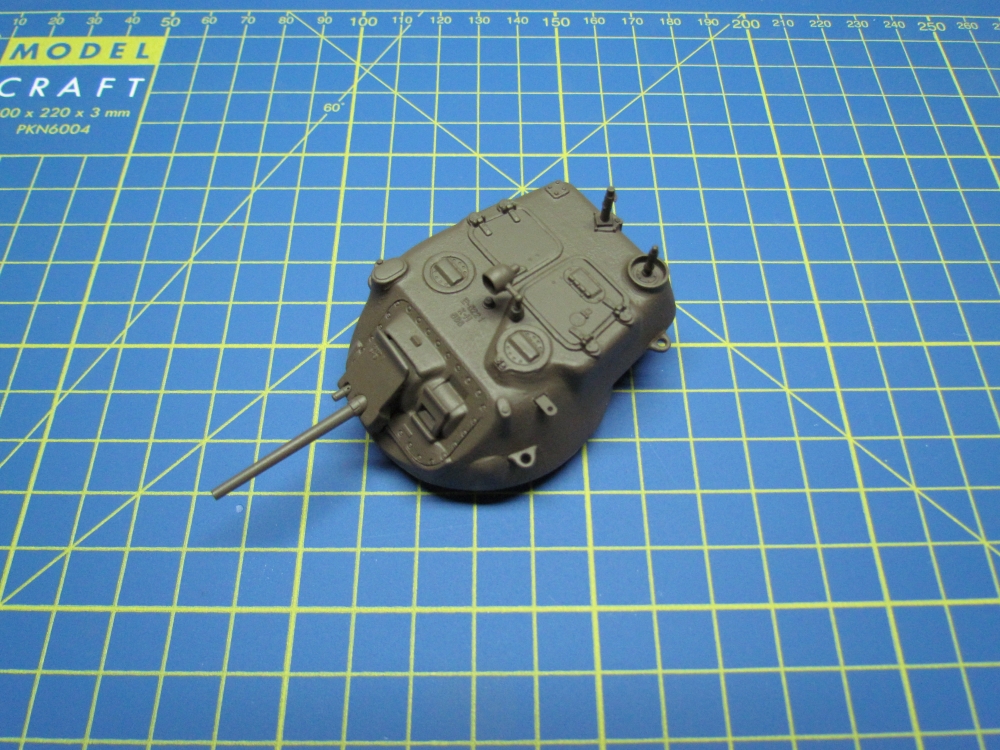
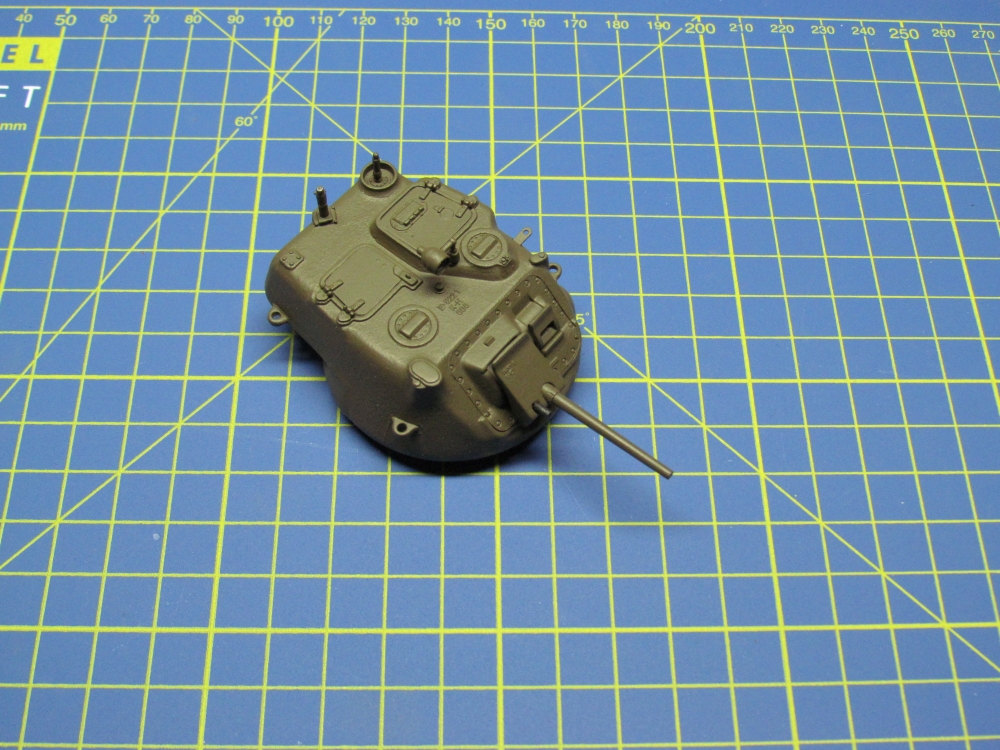
The turret top and bottom were joined and worked with Milliput and Mr.Surfacer 1000. The replacement barrels were added and the turret was finished with all parts.


Even at this stage the vehicle looked imposing.

Painting
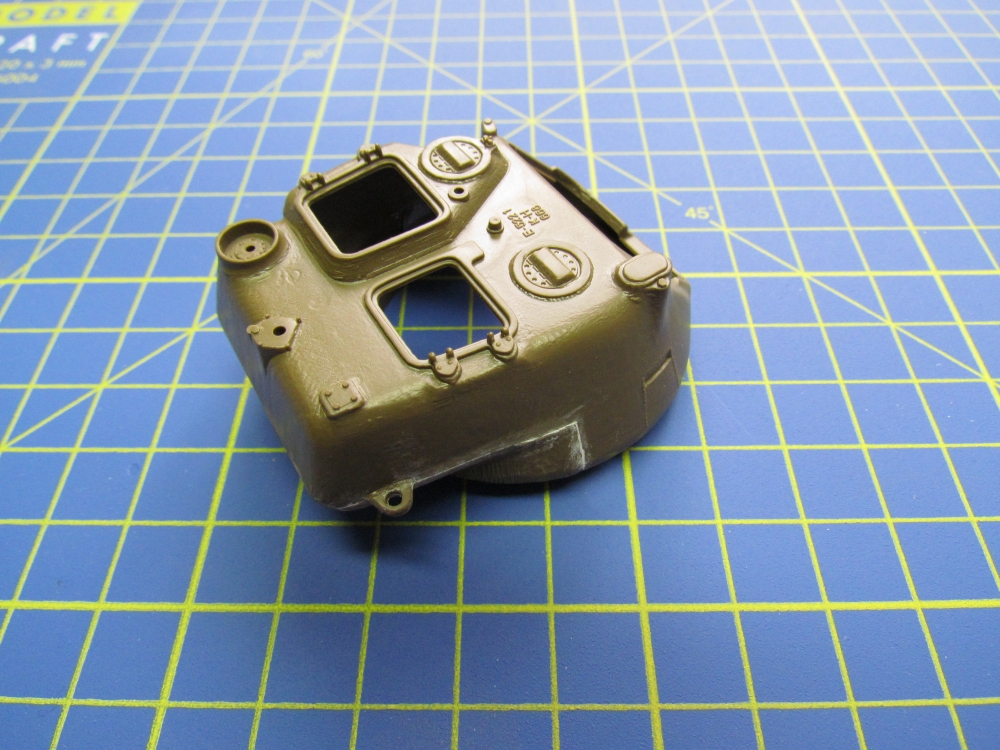
As usual, primer was sprayed on first. At the time of writing I am having an “issue” with primer, which I am finding quite annoying and frustrating! Basically it is giving me an excessively rough, almost gritty, finish. My friend describes a similar experience here. Indeed, it has already caused me to discard a fully assembled model, a Cromwell tank, when this happened earlier this year. I thought at the time that it was due to me insufficiently shaking the can. For this model I made sure that the can was well shaken and yet I found the same thing happening, although not as bad and not all over. Also, I was sufficiently alert to notice it this time (with the Cromwell I had actually moved onto the base coat before I decided the finish was unacceptable, which is too late to do anything about it). So, use of fine sand paper and even a scalpel got it back to a decent finish and the model could proceed! I understand that matt paint is by nature a rougher finish than gloss/semi-gloss/satin paint and that occasional use of fine sand paper is needed but this seems excessive to me.
Possible reasons for this grittiness are said to be high humidity (not a problem where I live) or spraying from too far away – the paint dries in the air and reaches the model as a powder. This seems a possibility to me and something I might check for next time. Also it seems that warming of the can can be beneficial. Of course, I will also investigate alternative primers. I have previously used Vallejo Model Air gray primer (71097 17 ml bottle). Nobody could accuse this finish of being gritty but I did previously have problems with it covering metal parts. For an all plastic or resin model I would still be tempted to use the Vallejo with an airbrush. Other than that I am going to try a can of Tamiya Fine Surface Primer – hopefully at that price it will be better than the rest!


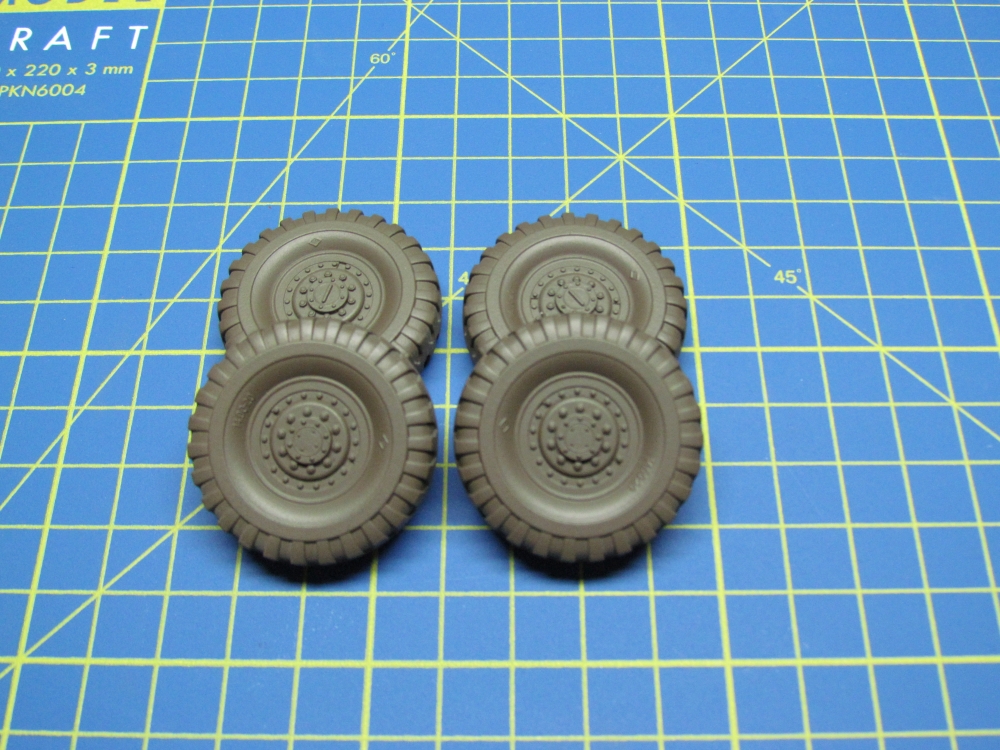
I used Vallejo Model Air Olive Drab (71043), which is reckoned to be a fair approximation of US Olive Drab, as a base coat. For practical reasons I had this to hand, rather than mixing up some variant of the British colour. Additionally, I thought that maybe these vehicles, originating in the US, would have that colour. At least one other person thinks so!

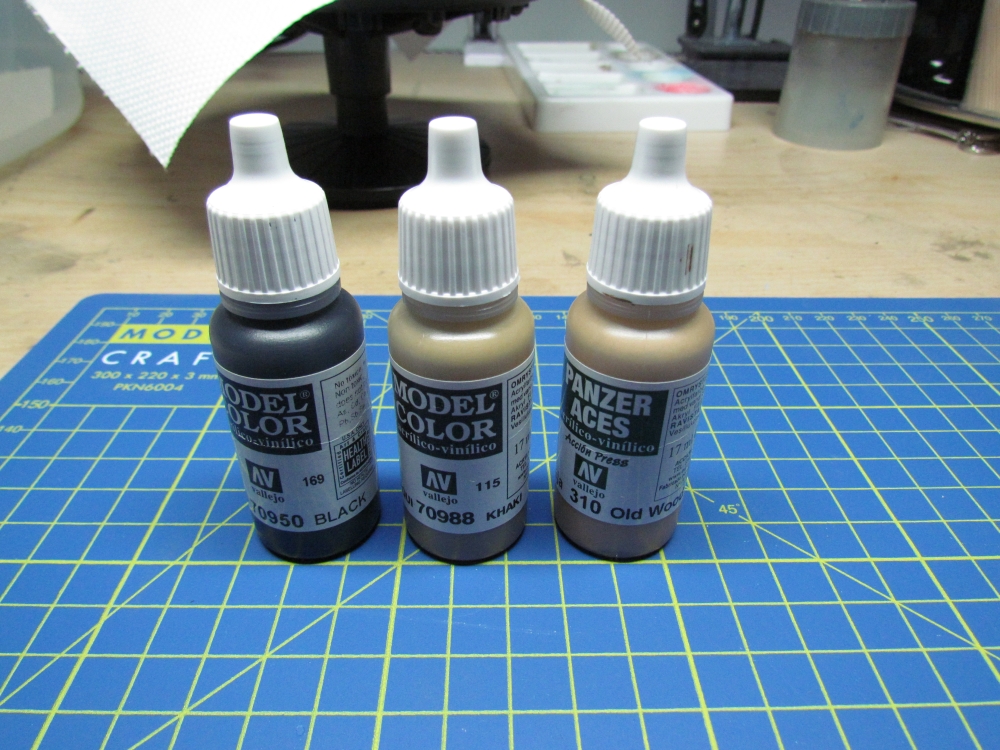
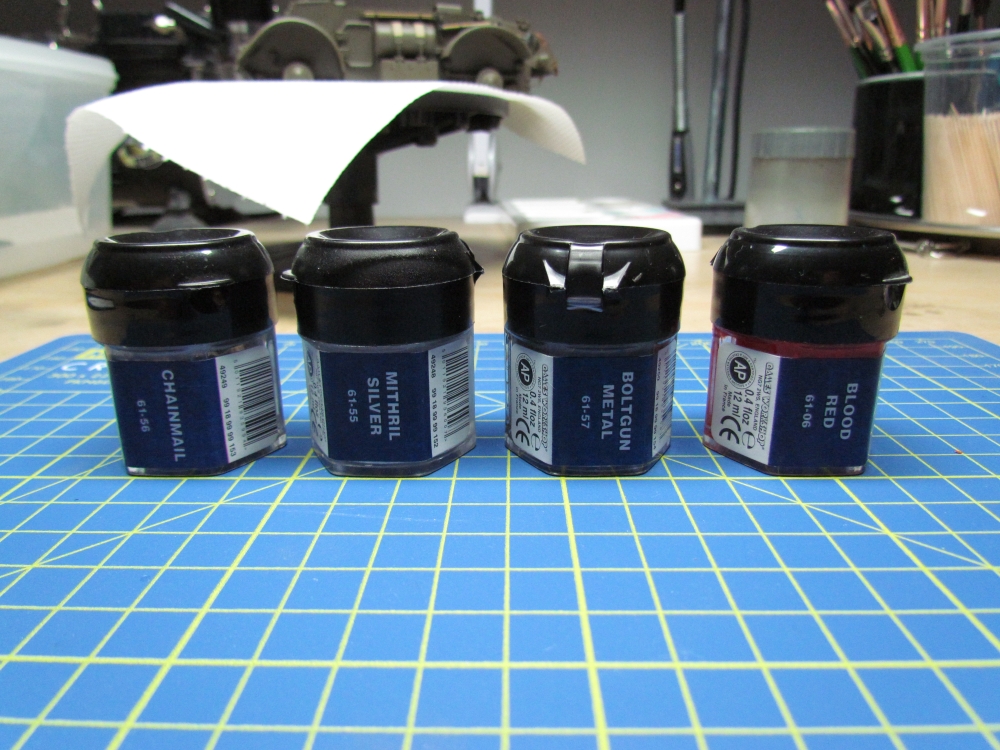
Next all detail painting was done by brush.


Decals & Weathering
Decals were added and then a subtle amount of paint chipping, effected with Vallejo Model Color German Camouflage Black Brown (70822). Actually it was quite hard to see it until up close.


A general wash and then a pin wash was done with a dilute mixture of Winsor and Newton Lamp Black and Raw Umber. Mig pigment (Dry Mud) was brushed into the tread of the tyres and then fixer was added. A mixture of pigment and fixer was then flicked from the end of a brush onto the underside and lower sides of the hull.


Extras
I have wanted to find ways to make my models stand out more. One way is stowage (quite apart from using it to hide slight imperfections!). Several companies make complete stowage sets for the Staghound – one such is Legend. These resin pieces are beautifully moulded – some of the best I have seen. There seems to be far too much in the box to use on one vehicle, unless you want to turn it into the travelling caravan shown on the box picture. Well, I will have leftovers for other Allied vehicles of the period. I selected baggage rolls, ammo boxes, a wooden box and a jerry can and painted them in various colours and finished with various effects. As always, there is room for improvement, but I was quite happy with how they turned out.


Final stages were placing the stowage on the vehicle and tying the boxes on the engine hatch down with some cotton thread (simulating some sort of thin rope). Mig Pigments (Standard Rust) and Tamiya weathering powder (Soot) were used on the exhaust.
Final thoughts
For the moment this is done. I did intend to look into more general body work stains (light rust, weather) but I will leave this for another time. This is something which I have not much tried to this date. Although, in the present case, the combination of the olive drab colour and subsequent dark oil wash makes me wonder if any such effect, unless overwhelming, would be apparent.


 Skarach's world
Leave a comment